I Began to Reconsider My Values After My Sister and a Friend Had Babies.
J ody 24-hour interval is giving a TEDx talk to a room full of people against a backdrop of signposts she has chosen for the occasion: "Crazy cat adult female", "Witch", "Hag", "Spinster", "Career woman". "What comes to mind when you see those words?" she asks the audience. They shift uneasily. Gently, she answers her own question: "All of them are terms used for childless women … I'yard a childless woman. And I'm hither to tell yous about my tribe – those one in five women without children hidden in manifestly sight all around you lot."
Mean solar day is involuntarily childless. She remembers the moment she realised she was definitely never going to exist a female parent. It was February 2009 and, at 44-and-a-half, she had left a bad long-term relationship and moved into a grotty London flat. "I was standing past the window, watching the pelting make dusty tracks downwardly the glass, when the traffic in the street below seemed to go silent, as if I'd put it on 'mute'. In that moment, I became acutely enlightened of myself, almost as if I were an observer of the scene from exterior my torso. Then information technology came to me: it's over. I'grand never going to have a baby."
We at present know that 20% of British women born, like Twenty-four hour period, in the 1960s, turned 45 without having a kid. The number is double that of their mother's generation – we'll take to wait for the next census in 2021 to detect out whether the numbers rose or barbarous for women built-in in the 70s and 80s (and whether or not government statisticians revise the fertility cutoff point – the age at which it is assumed women will stop having children – to extend beyond 45). And all the same, on that February afternoon 8 years ago, 24-hour interval could notice null on the internet or in books most her painful, irreversible state of affairs. When she typed "childless woman" into any search engine, she was directed to sites run by women who had elected to be "child-free" – "some of them maxim actually hateful things virtually how awful kids were". She knew no one like her, and felt alone and frightened. There followed "four years of hell": "My personality completely changed. There were loads of things I couldn't bargain with. I withdrew from all my relationships. I saw doctors, therapists – nobody knew what the matter with me was."
It's fascinating to watch how conversations about uncomfortable, rarely discussed subjects begin to take root in the public domain. Almost always, they're pushed into consciousness, non past academics or specialists, simply by people who accept been personally afflicted by the problems and notice themselves reluctant champions of causes they however have difficulty admitting to. Day's showtime blogpost – two years into her four-year hell – concerned what she called the Tunnel, "the experience I had at the end of my fourth dimension to get a female parent. It'southward a non-specific time, every woman knows what I'm talking well-nigh, and it's kind of when your life is narrowing downwardly and down and downward, and you feel equally if you're stuck in this tunnel." The response was enormous. Her blog, Gateway Women, flourished into a huge online community, and so became a book for women struggling to find meaning in a life that was supposed to be filled with children. Now at that place are more 100 free Gateway Meetup groups for involuntarily childless women in Britain and some other 100 effectually the world, including in Switzerland, the U.s. and India. Day runs workshops around the world for women struggling with childlessness, and is preparation to exist a psychotherapist.
Only very recently accept other people started talking publicly for the showtime time about their involuntary childlessness. And, intriguingly, nearly of them are British, where the rate of childlessness among women over 45 is lower than in, say, Ireland (where one in four women born in the 1960s haven't had children) or Germany (where the number is i in three). I talk to Lizzie Lowrie, who runs retreats for childless women and this year organised a "Mother's Solar day Runaway" service at Liverpool Cathedral; to Stephanie Phillips, who set up Earth Childlessness Week 2 years ago ("Parents will say they are fed upward waiting to be a grandparent. People need to stop maxim 'the clock is ticking'. At that place needs to exist an acceptance that not everyone will exist a parent, and that some people who aren't need to grieve"); to Kirsty Woodard, founder, iii years agone, of the organisation Aging Without Children, which supports and campaigns for older people who don't take children. Woodard tells me that i.two million people over the historic period of 65 in the UK do not have children – a number that will double to 2 million by 2030: "Half of all older people alive lonely. The supposition by the regime is that all older people have family who will help to look after them."
This Fri, as part of the fifty+ festival in York, the shadow transport minister, Rachael Maskell MP, who doesn't have children, will, for the first time, join a console discussion on ageing without children. On the same afternoon, on the other side of the world, in Cleveland, Ohio, Day volition be the keynote speaker for the Not Mom top. Among many interesting observations made by its organiser, Karen Malone Wright, is her belief "that parents have for granted the many networking opportunities available to them. It's like to businesspeople who play golf game. Parents bored at a PTA meeting or soccer game talk and connect, sometimes professionally." May says that, in the workplace, "the 1 in five" are where the LGBT community were 2 decades agone, except that – proportionally – they're far more numerous. "Companies conflate family- and female-friendly policies, and you often have situations where childless people are expected to pick up the slack when someone goes off on motherhood get out. I remember Hour departments are going to first having to factor in the wants and needs of the childless." This is a concept that'southward likely to be inexplainable to some people, as one female person blogger wrote in her review of a US book about childlessness: "In a world where there is state of war, disease, starvation, murder and divisiveness, beingness a childless old maid is pretty low on the scale of tragedies."
But who are the childless and how many of them wanted children? The closest we can come is a 2010 meta-assay by the Dutch academic Prof Renske Keiser, which suggested that simply 10% of childless women actively chose non to get mothers. That leaves 90% of women like Day. Just nine% of that 90% are childless for known medical reasons. If we accept these figures at face value, it becomes all the more puzzling that involuntary childless women are and then invisible. "I believe the main reason that the child-free are so much more visible online," says Solar day, "is that they practice non feel silenced by shame. Their child-liberty is a positive selection; one that they feel proud of and that helps them face down the stigma of being women without children. Childless women have to wade through grief to become to that place, and many of them remain stuck in it for decades, maybe fifty-fifty for their whole lives. I have certainly met and worked with women in their 70s who have never had a chance to motility beyond their grief because of a lack of awareness or support."
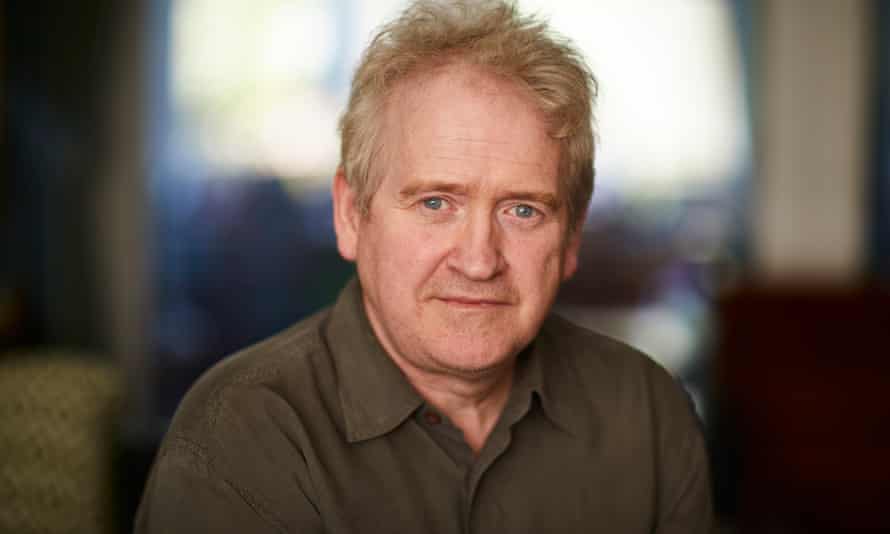
Among those people who are involuntary childless is an fifty-fifty more invisible subset, and not a small one: men. In the tardily 90s, Robin Hadley, so 39, began to grapple with a paradigm shift in his own future life plans. Hadley had started a relationship with a woman a few years older than him. She had already accepted that she would remain childless, only Hadley had always wanted to be a dad. He had been deeply jealous when his all-time friend had started a family unit. And now, here he was – confronted by a last chance to have a baby. For Hadley, existence childless by circumstance meant having made a decision to pursue a relationship where he knew children were off the agenda. "I know there are some men who prioritise their desire to exist a dad over the desire to have a good relationship, but, for me, the relationship was more important." He remains happily married and childless. "The hurting of childlessness comes in waves. I have friends who are becoming grandparents, and the same feelings you lot had when they started having kids resurface."
Hadley's painful state of affairs concluded up redirecting his professional interests. He wanted to know more than well-nigh how men similar him felt nigh fatherhood – "and I was stunned. There's simply nothing out at that place at all." (Information technology's startling, for instance, that the Role for National Statistics only collects information on how many women have children.) A technical photographer, he began to retrain every bit a counsellor. He did an MA (his thesis was on how the desire for fatherhood affects men), then got funding to kickoff a PhD on life without fatherhood. He advertised in the back of the Oldie magazine for men who would be willing to speak anonymously most how they would have liked to take been a dad ("getting men to speak about information technology is near impossible, even privately"). The 15 men he interviewed at length were between the ages of 49 and 82. They had go childless through fertility problems, bad timing, the lack of a suitable partner and bad relationships. One man had been written off by his spouse every bit "not dad fabric"; other men had partners whose fear of giving nascence was then intense that the couple decided to remain childless. "Men don't say 'bereaved' or 'lost', like their female person counterparts might," he says. "They're more probable to say, 'I experience my life'south off runway', or 'something'due south missing'. And behind that little word 'missing' there is a universe of thoughts, feelings, desires, fears and what-ifs."
Childless men, he says, are seen equally weak and objects of deep suspicion: "If you don't have children every bit a human being, y'all are basically maxim you lot are a failure equally a reproductive homo being. There'south a feeling that you lot're a threat, that you could be a paedophile and that you shouldn't exist around children at all." He thinks that inquiry into male infertility and public discussion of it is so meagre because it makes men look feeble and our culture doesn't allow that.
Hadley says the assumption that men can have children whenever they want to ignores the "social clock" – the "what your peers are doing" factor. "To men, it's as important as the biological clock. Yep, in that location are people such equally Rod Stewart having kids in their 60s, just they actually are the exceptions. Men have said to me: "It wouldn't be right for me to have children when I'm fifty or lx. I don't want to expect like their grandad at the schoolhouse gates." (There are too, of course, biological factors that might affect men's choices virtually when to procreate – fertility decreases for men with age, too.) Hadley, who undertook his inquiry for personal reasons, is almost alone in Britain in having gone on the tape about this complex, hidden predicament for men. Nevertheless, a pair of flick-makers are now attempting to crowdfund a documentary, entitled The Like shooting fish in a barrel Bit, in which men will speak publicly nigh their experience of beingness involuntary childless and the lack of support effectually the consequence. To date, they accept raised £1,000 of their £ten,000 target.
By the fourth dimension she was 33, Lizzie Lowrie (now 37) had had six miscarriages. Married to a trainee vicar and living in Cambridge at the time, her social environment, she says, was "like a infant factory. It was possibly the worst surround for someone who couldn't have children." She one time hid in a bicycle shed to avoid the other vicars' wives and their children. "My biggest nightmare was to have that life; of non existence a mother. I had ever imagined that I'd have had children by the time I was 35, and, equally the day got closer, I had no thought how to handle it. I didn't know how I was going to survive. Not being able to take children is the most difficult experience of my life. I accept come a long manner. I know now that I don't demand a kid to take a life of purpose, just the want to take a kid – that never goes away. I'thou non as aback of it every bit I was at first."
Lowrie and her husband gear up a blog, Saltwater and Beloved, with another childless couple because "there is and so much online about people'due south experiences, but the majority are actually unhelpful. People usually merely share their story when it has a happy ending. When you don't have the happy ending, you need to know someone's at that place with yous in [feeling] that pain."
This twelvemonth, in Liverpool Cathedral, she and the Rev Sonya Dorah held a service on the evening earlier Mothering Sunday for people who, like them, had non been able to have biological children. Dorah, who wrote the liturgy and now has iii adopted children, contracted chlamydia when she was raped, aged 17, leaving her infertile. She says of the service: "Information technology was an amazing day. The kind of thing where you recollect: why hasn't this always existed? Why have childless people never been acknowledged? We had about eighty people in the cathedral – men and women – and nosotros're thinking of doing others. There are markers in the yr that are particularly difficult for the involuntary childless: Christmas, Valentine'southward Day, the kids going dorsum to schoolhouse at the showtime of the academic year. There'south also a feeling – that I believe is wrong – that you lot don't know love unless you have had a child. I know other vicars who are childless and don't agree the baby at christenings because it's also painful for them."
There are many dozens of reasons people get involuntarily childless. Day has described some of them in her mail, Fifty Ways Not to Be a Mother, "but I could easily get upward to 100," she says – the list includes "being single and unable to find a suitable relationship from your mid-30s onwards" and "having your ovaries damaged past chemotherapy". It's the most-visited folio on her site, alongside advice on how to respond to the "Exercise yous have children?" question and the almost comically inappropriate responses childlessness can provoke in other people: "Everything happens for a reason," is in the Top five, though Lowrie'due south Spanish instructor topped that when "she offered to carry a baby for me on Facebook".
Information technology'south noticeable, in the comments section of Day'south web log, how oft it's mothers, not fathers or other childless women, who nigh frequently cause upset or offence among people who take non been able to have children. "Motherhood is virtually like an idol that is worshipped," says Lowrie. "A lot of women who can't take children find their relationships with female friends and their mothers are really afflicted. Being childless is a very complex form of grief. Day to solar day, it's still painful. The want to have a child is nonetheless there. I take friends I'm no longer shut to because all they talk most is children or being a mother." She tries to get them to embrace the other aspects of their lives because, if they don't, what does that say about them or her? "Surely a female parent is more than someone who has children? And I'1000 more than someone who doesn't."
Source: https://www.theguardian.com/lifeandstyle/2017/oct/02/the-desire-to-have-a-child-never-goes-away-how-the-involuntarily-childless-are-forming-a-new-movement
0 Response to "I Began to Reconsider My Values After My Sister and a Friend Had Babies."
Post a Comment