Empty streets remind us how people, not places, make a city beautiful
Advertising
CNA Lifestyle
Empty streets remind us how people, not places, brand a city beautiful
The world'south near remarkable places are now devoid of tourists and looks alienating without people. It seems crowds really are what makes an urban space.
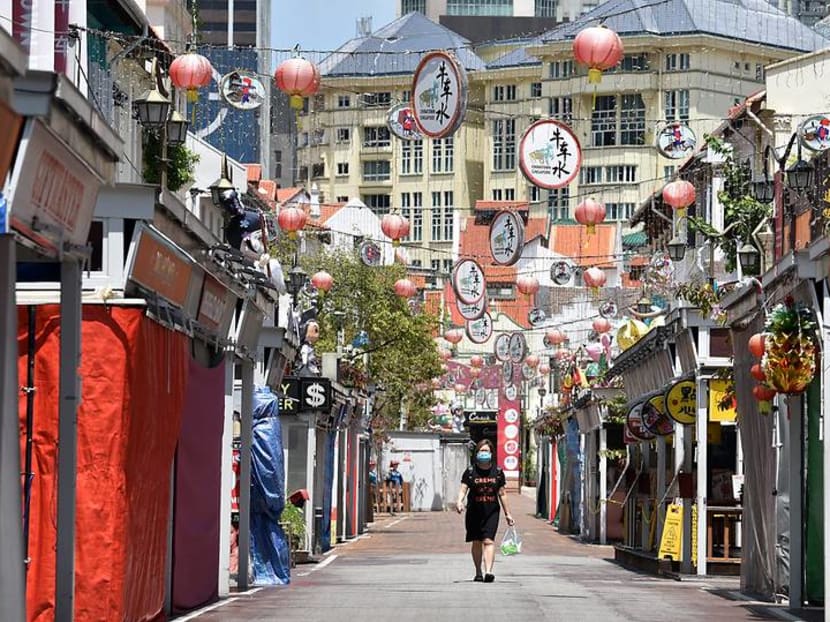
A lone passerby walks past a street of shuttered shops in the sweltering afternoon oestrus in Chinatown. (Photo: Jeremy Long)
Edgar Allan Poe begins his short story The Human being Of The Crowd with a list of circumstances that seem to us both familiar and half-remembered.
He describes a homo sitting in a London coffee firm and looking through a bow window at the rush-hour crowds outside, captivated in the sheer man spectacle of what was then the biggest metropolis the world had ever known.
Coffee houses, crowds, remember those? What a fourth dimension that was. Poe's protagonist is mesmerised by one particular old man moving among the clerks, the bankers and the beggars. He decides to follow him. Moving through the crowd and tracing the old human's steps through the urban center long into the night, he finally realises that this is a life that refuses to be read. The human being of the crowd is simultaneously distinct and anonymous, a cipher for the city itself.
THE MAGNETIC DRAW OF A Crowd
Poe's story continues to compel because it touches on the paradoxes of urban life, the blend of repulsion and allure, the strange, magnetic draw of a crowd and the alienation and unknowability of the modern city.
It is the same dichotomy embodied in the works of De Quincey, Baudelaire, Rimbaud and later in Conan Doyle'south Sherlock Holmes, the flaneur every bit student of human nature, able to lose himself in the city and its web of connections and traces. "For the painter of modern life," wrote Baudelaire, "the crowd is his domain . . . His passion and his profession is to merge with the crowd.
For the perfect idler, for the passionate observer, it becomes an immense source of enjoyment to establish his dwelling in the throng . . . to be at the very centre of the world and yet to be unseen by the globe."
When Poe and Baudelaire were writing, humanity'southward general feel was of a life lived among family and a group of people who were known. The city was something else. The anonymity made the spectator invisible, adopting the position of the artist, the poet or the flaneur.
Just there was another strand of literature, the 19th-century apocalypto-utopian novels – HG Wells' The State of war Of The Worlds, William Morris's News From Nowhere, Richard Jefferies'south After London, Edward Bellamy's Looking Backward. In these, the crowded urban center gives way to an emptier identify, vacated due to aliens, revolution, illness. They tend to describe a man (information technology is unremarkably, of course, a human being) lonely, a small figure in the post-urban sublime.
The resilient trope of straggling survivors in the big urban center feeds the panoramic shots in 28 Days Later, The Day After Tomorrow, I Am Legend. We recognise the post-apocalyptic city from fragments – an arm of the Statue of Liberty or the crown of a skyscraper.
A Strange VERSION OF EMPTY Metropolis SHOTS
Poe'south relentless period now feels similar nostalgia while we are stuck in a strange version of those empty-urban center shots, alone in a familiar place turned eerie. Merely before the lockdown, I walked to an appointment in Whitehall through Trafalgar Square, which isn't something I'd normally practice.
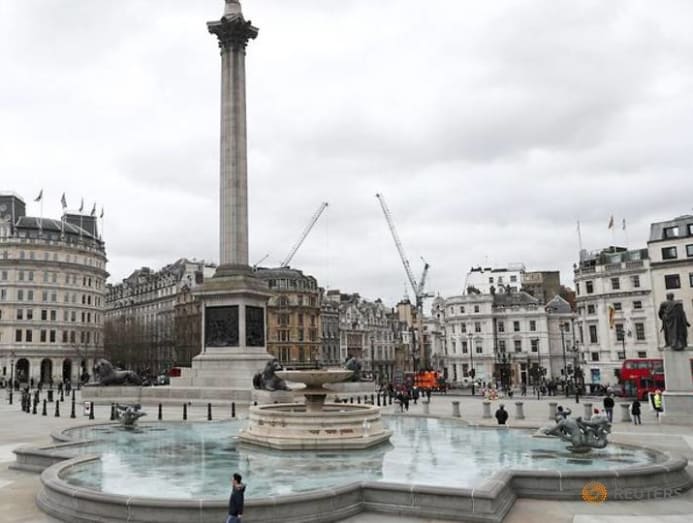
Normally I avoid the living statues, the Yodas on sticks and gold-sprayed Chaplins, buskers and bin drummers who populate the plaza, but this time at that place was aught to avoid. There were three people. I have never, at any time of the year or the day or dark, seen Trafalgar Foursquare empty.
Information technology was jarring to run into. It reminded me of those extremely slow exposure photos where movement makes crowds disappear and but the architecture remains in focus. The city suddenly appeared like an architect's model.
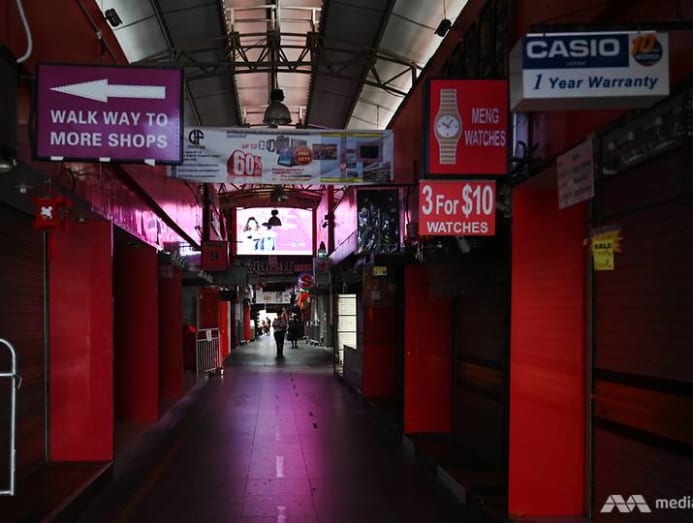
Social media and TV news reports have, for the past few weeks, been saturated with images of empty hyper-tourist sites, the Trevi Fountain, the Spanish Steps, the narrow streets of Montmartre and Covent Garden, places usually heaving with tourists now entirely empty.
Nosotros might bemoan that the nigh cute places, the minor piazzas or petty old cafés, the museums and landmarks we were in one case and then moved past are incommunicable to appreciate as they are and so crowded. And yet empty, are they not equally alienating?

Cities are a complex cocktail of fabric, commerce, encounter, consumption, crowds and menses. Strip any element out and they cease to deed as cities.
It is the way people inhabit and use urban space that makes it so compelling. It'south why we are seduced past an Italian passeggiata equally throngs of families with grandparents and kids in tow wander up and downward the shopping streets with water ice creams or cakes.
It'southward the way people cluster in pavement cafes or outside an English pub on a sunny evening which makes a city distinctive. The rhythm of a metropolis is dictated by crowds which surge during blitz hours, lunchtimes and evenings, its streets interim equally arteries pumping the blood of citizens through to continue them alive.
Remove the throng and the city becomes a museum, a simulacrum of urbanity in the style a stage ready and an auditorium with no audience exudes an almost existential emptiness.
SOCIAL DISTANCING AND THE City'S SPIRIT
The notion of social distancing is antithetical to the spirit of the city. Those who come to the city come for the intensity of the crowd, even if they think they yearn for escape.
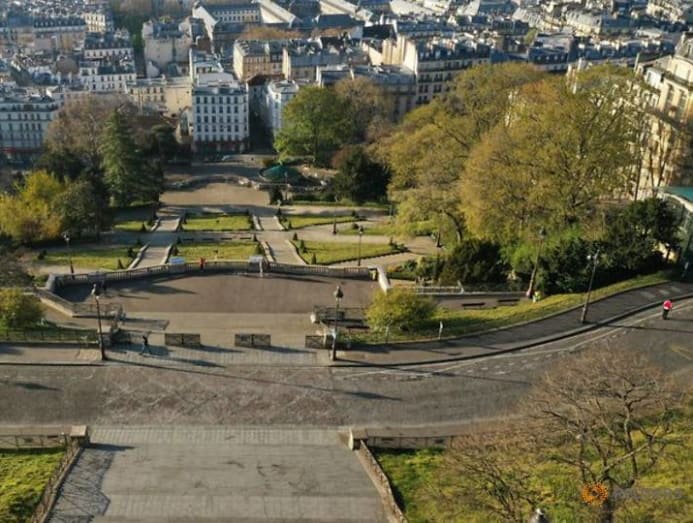
A century and a half ago the great urban parks were created precisely to relieve overcrowded cities, to give a sense of nature among the tenements and towers, to address darkness and illness. They were places of classlessness in which all elements of society mingled.
Now those parks which were conceived as a respite from sickness accept found themselves under assault again. A curious reversal has occurred as the city streets and squares empty out and the parks fill up.
Information technology'south a weird centrifugal force, pushing people to the edges every bit ecstatic dogs who've never been walked so much in their lives are used as excuses for air and people jog around the edges of scraggy light-green spaces to escape interior incarceration. This too might soon come to an stop.
As we retreat into our homes we might reverberate on contemporary culture'southward most complex and remarkable work of art: City crowds.
By Edwin Heathcote © 2022 The Fiscal Times
Source: https://cnalifestyle.channelnewsasia.com/travel/in-praise-of-crowds-city-most-remarkable-art-form-194316
0 Response to "Empty streets remind us how people, not places, make a city beautiful"
Post a Comment