The kaiseki chef who uses the same spring water as Kyoto’s Imperial Palace
Advertizement
Remarkable Living
The kaiseki chef who uses the same spring h2o as Kyoto's Imperial Palace
Kyoto's natural groundwater, explains chef Yoshiro Kiyama, possessor of the one-Michelin-starred Kiyama, is "peculiarly soft" and is fantabulous for making dashi.
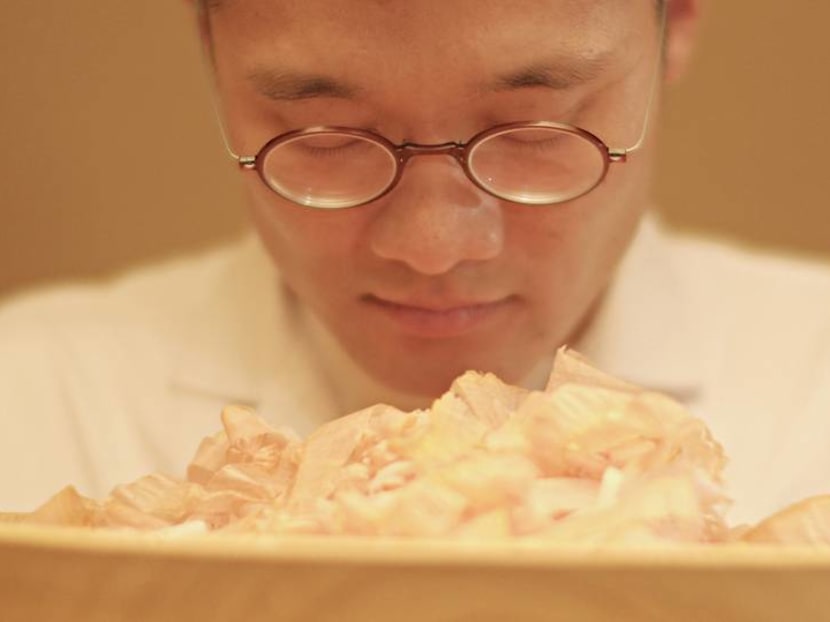
Chef Yoshiro Kiyama is the owner-operator of Kiyama in Kyoto. (Photograph: Freestate Productions)
14 Jan 2022 06:30AM (Updated: 21 May 2022 12:58PM)
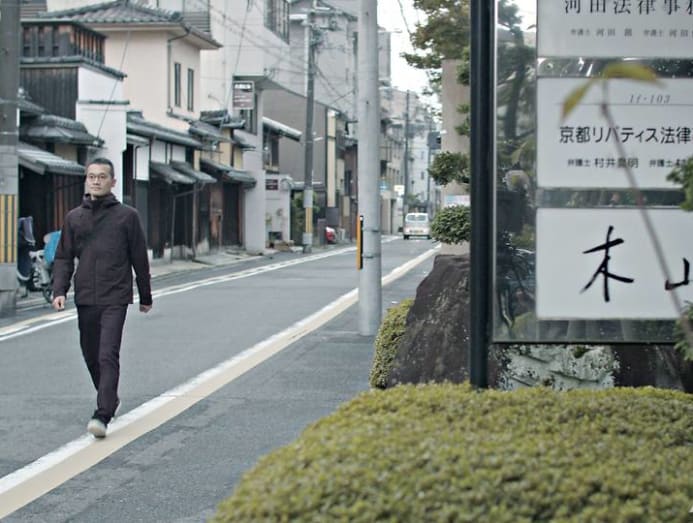
When he turned 36, chef Yoshiro Kiyama opened Kiyama on the beginning floor of a condo in the upscale residential expanse of Marutamachi, only a v-infinitesimal walk from Kyoto'due south Imperial Palace.
Kiyama, ane of Nippon's ascent culinary stars, had trained for 15 years at Wakuden, a Kyoto institution known for putting out culinary talents. Ten of those years were spent as caput chef.
Just one year after its opening in 2017, Kiyama was bestowed a Michelin star, becoming Kyoto's virtually talked about kaiseki restaurant by gourmands across the country.
"This space used to be a police firm. When I first saw information technology, my heart told me that I needed to have my restaurant here. I felt it was fate that led me to this location," said Kiyama on how he found the perfect premises.
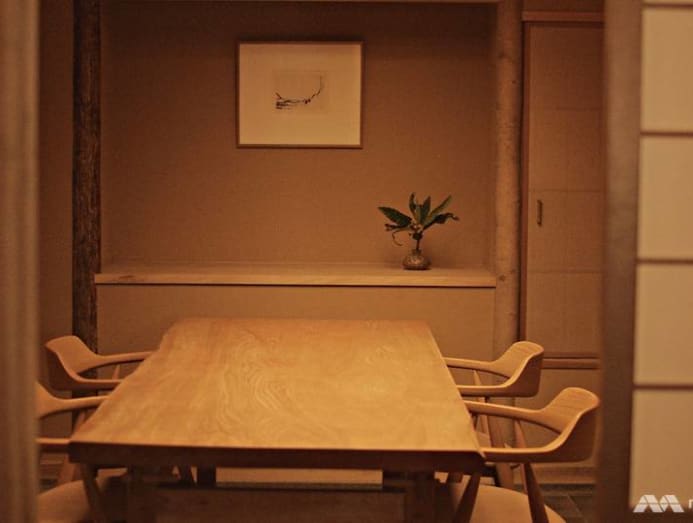
As one enters, one instantly feels a sense of calm thank you to the restaurant's minimalist, wood-based aesthetic, which shifts the focus to the dining experience. There is a nine-seater counter and 2 individual rooms that resemble classic tea houses. Here, one's mind slows to a clamber, giving in one case and infinite to bask a two-hour kaiseki meal.
READ> Temples, ryokans and tombstones: A slow travel guide to Kyoto, Japan
Located south of the imperial grounds' Sakaimachi Gate, Kiyama found out that the restaurant is built above the aforementioned stream source as the water used by the Imperial Palace. To draw h2o for his restaurant's use, he built a well connected to the stream that gives him sectional access.
Kyoto's natural groundwater, Kiyama explained, is very soft and contains lower levels of calcium and magnesium, making it platonic to cook broths and create simple all the same compelling dishes. "Having soft water ways you can make adept kelp dashi, merely bonito works well too. Dashi made from bonito flakes has much richer flavours and a deeper taste," he said.
A dining experience here features a degustation carte of dishes infused with different aromatic broths. The culinary journey ends with a comforting cup of matcha.
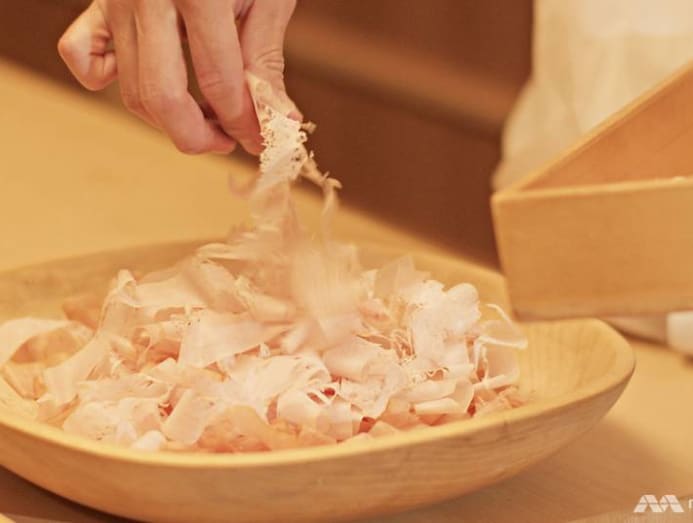
To invite diners to experience the unabridged process with him, Kiyama begins by making the broth in front of them. Offset, his apprentice skilfully slices difficult blocks of bonito into beautifully thin flakes until they fill up a big bowl. This is a rare sight as about restaurants use ready-made bonito flakes. The flakes are so tossed into a kombu kelp stock which has been brewing for 2 days. When the taste is only right, Kiyama strains the mixture through a sieve and uses that every bit the base for the soup.
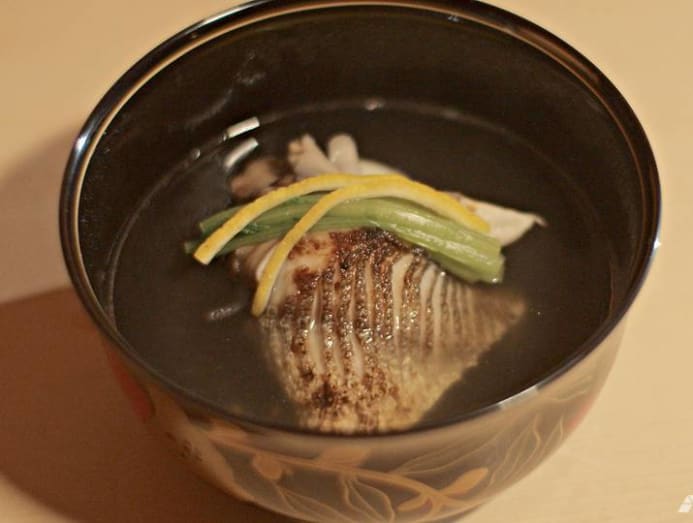
Because Kaiseki is oft considered the most refined of Japanese cuisines, where the presentation and arrangement of each ingredient is just every bit important as the taste, Kiyama pays special attention to the tableware. Many of these are antiques from China's Ming Dynasty and Japan's Edo Period, advisedly chosen to match the colour and composition of each dish.
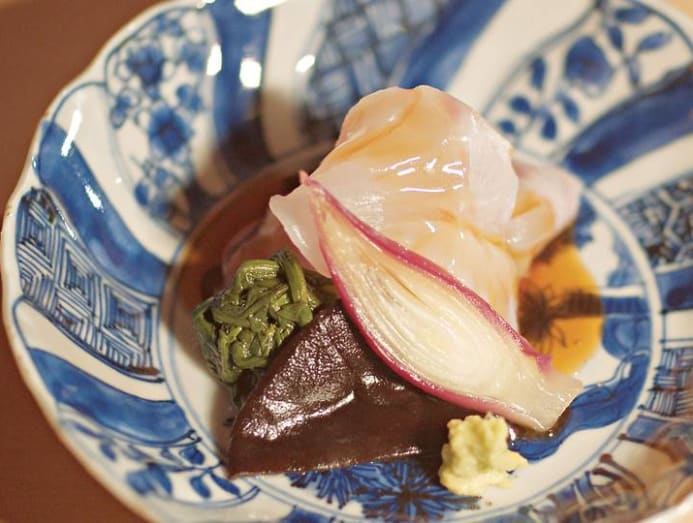
Kiyama'southward set card changes according to what's available in the season. This is good news for those who enjoy variety, as the courses change throughout the year. "What we care most almost is that we want our guests to keep coming back. When the ingredients change, the bill of fare changes. I apply what's best in that specific season and month, and what best fits our dashi," he said.
Adjusted from the serial Remarkable Living. Scout full episodes on CNA, every Sunday at eight.30pm.
0 Response to "The kaiseki chef who uses the same spring water as Kyoto’s Imperial Palace"
Post a Comment